

Blog
Disposable Vape Beginner Guide 2027: Everything You Need to Know

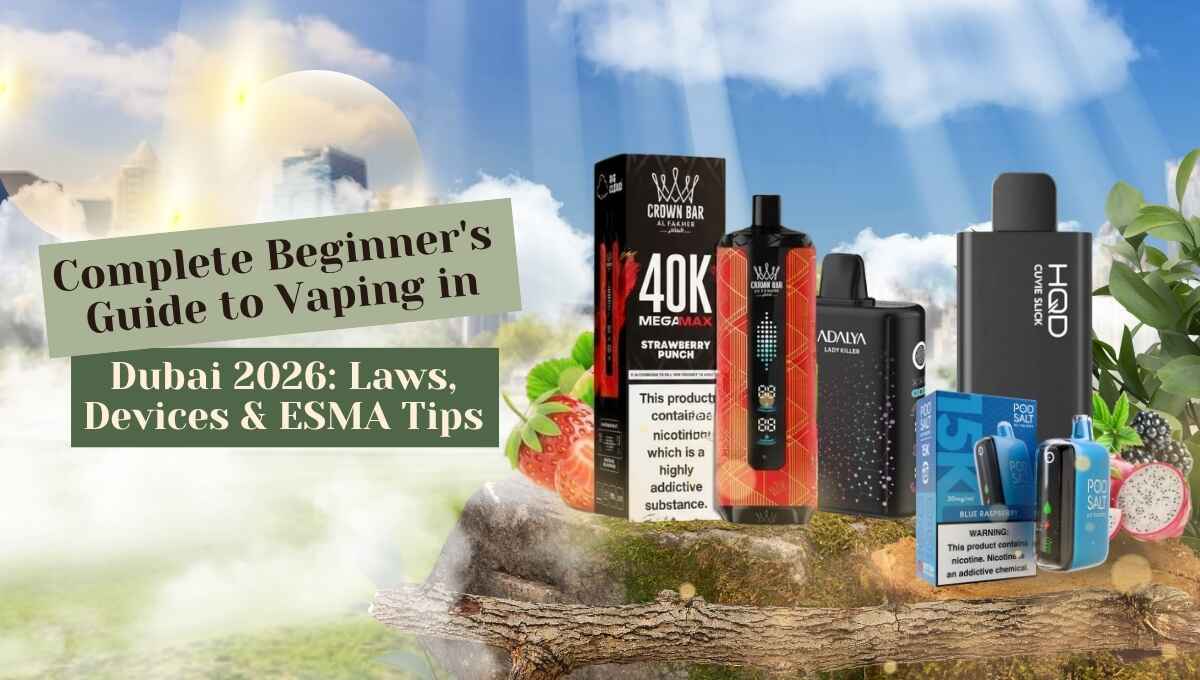
Disposable vapes have become a widely recognized category of vaping products because of their compact designs, simple operation, and variety of available flavours. For people researching vaping for the first time, understanding how disposable vapes work, what their specifications mean, and what safety considerations matter can help them make more informed decisions.
This Disposable Vape Beginner Guide 2027 explains the basics of disposable vaping devices, including their main components, battery types, e-liquid capacity, puff-count claims, nicotine strengths, charging features, maintenance considerations, and responsible disposal. It also highlights important health risks and legal considerations for anyone researching these products.
What Is a Disposable Vape?
A disposable vape is an electronic device designed to be used for a limited period before the entire unit is discarded. Depending on the model, it may contain a rechargeable or non-rechargeable battery, a liquid reservoir, a heating element, and an airflow sensor.
When a user inhales through the mouthpiece, the device typically activates its heating system. The heating element warms the liquid and produces an aerosol that can be inhaled. This aerosol is often called vapour, although it is not simply water vapour.
Unlike reusable vaping systems, most disposable devices do not require users to replace coils or refill the liquid reservoir. Some models include USB-C charging ports, screens, or adjustable airflow, while others have a basic design with no additional controls.
Disposable vapes may contain nicotine, which is addictive. Some products are labelled nicotine-free, but consumers should not assume that a product’s contents are accurate without reliable verification.
How Does a Disposable Vape Work?
Understanding the main components helps explain how these devices operate.
1. Battery
The battery supplies the electricity needed to operate the heating element. Battery capacity is commonly measured in milliampere-hours (mAh). A larger capacity may support longer operation under similar conditions, but actual battery life also depends on power consumption, puff duration, and device design.
Some disposable vapes have rechargeable batteries, while others are designed for single-use battery operation.
2. Heating Element
The heating element, sometimes called a coil, heats the liquid to produce an aerosol. Different devices use different heating technologies and power levels, which can affect vapour production and flavour delivery.
3. E-Liquid Reservoir
The reservoir holds the liquid used by the device. E-liquid generally contains ingredients such as propylene glycol, vegetable glycerin, flavourings, and, in many products, nicotine.
The amount of liquid in a device can influence its potential operating life. However, users should not assume that a larger reservoir automatically means better performance or safety.
4. Mouthpiece and Airflow System
The mouthpiece provides the point of inhalation. Many disposable devices use draw activation, meaning that inhalation triggers the heating system automatically.
Some advanced models include adjustable airflow controls, allowing the airflow resistance to be changed within the limits designed by the manufacturer.
Understanding Disposable Vape Specifications
Product descriptions often contain technical terms that can be confusing for beginners. Knowing what these specifications mean makes it easier to compare devices without relying on marketing claims alone.
| Specification | What It Means |
|---|---|
| Puff count | An estimated number of inhalations under specified testing conditions |
| Battery capacity | The battery’s rated capacity, usually measured in mAh |
| E-liquid capacity | The amount of liquid held by the device |
| Nicotine strength | The concentration of nicotine in the liquid |
| Charging port | The connection used to recharge compatible devices |
| Coil technology | The heating system used to produce aerosol |
| Airflow control | A feature that adjusts how air moves through the device |
| Display screen | A screen that may show battery or liquid information |
| Device dimensions | The physical size and shape of the product |
Specifications should be checked against the product packaging and reliable manufacturer documentation. Not every device includes every feature.
What Does Puff Count Mean?
Puff count is one of the most prominent specifications displayed on disposable vape packaging. Products may advertise thousands of puffs, but the figure is generally an estimate rather than a guarantee.
Actual puff count can vary according to several factors:
- The length of each inhalation.
- The device’s power settings.
- The heating element’s design.
- The amount of liquid consumed per puff.
- Battery performance and operating conditions.
For example, a device advertised with a high puff count may produce fewer inhalations during use if each puff is longer than the testing method used to establish the advertised figure.
Important: Puff count is not a reliable measure of nicotine exposure, product quality, or safety. A higher advertised number does not mean that a device is healthier or more economical for every user.
Understanding Nicotine Strength
Nicotine strength is an important consideration because nicotine can cause dependence. Disposable vape products are sold with different nicotine concentrations, depending on the market and applicable regulations.
Nicotine strength may be expressed as a percentage or in milligrams per millilitre (mg/mL).
For example, where the percentage is explicitly defined as weight per volume:
- 1% corresponds to approximately 10 mg/mL.
- 2% corresponds to approximately 20 mg/mL.
- 5% corresponds to approximately 50 mg/mL.
These conversions depend on how the concentration is expressed and should not be applied blindly to every label.
Nicotine concentration is also different from the total amount of nicotine in a device. The quantity present in the liquid does not directly tell you how much will be absorbed into the body.
Nicotine can increase heart rate and blood pressure and may cause nausea, dizziness, headaches, or other unpleasant effects. People who do not use nicotine should not start vaping, and vaping products should be kept away from children and pets.
Common Disposable Vape Flavour Categories
Disposable vape products may be offered in a broad range of flavour profiles. Understanding the general categories can help readers interpret product descriptions.
Fruit Flavours
Fruit-inspired descriptions may include watermelon, mango, strawberry, apple, grape, or mixed berries. Products in this category vary in sweetness and flavour intensity.
Menthol and Cooling Flavours
Some products are described as mint, menthol, or ice flavours. These may create a cooling sensation, but that sensation does not make the aerosol safer to inhale.
Beverage-Inspired Flavours
Certain products use descriptions inspired by drinks, such as lemonade, cola, or fruit beverages. These are flavour descriptions rather than evidence that the liquid contains the corresponding beverage.
Tobacco-Inspired Flavours
Tobacco-inspired flavour profiles attempt to reproduce aspects of the taste associated with tobacco. The flavour itself does not establish whether a product contains nicotine or whether it is less harmful than another vape.
Flavourings that are suitable for food are not necessarily proven safe to inhale. A pleasant taste should never be treated as an indicator of low health risk.
Rechargeable vs. Non-Rechargeable Disposable Vapes
Disposable devices can differ significantly in their battery design.
| Feature | Rechargeable Disposable | Non-Rechargeable Disposable |
|---|---|---|
| Battery | Can be recharged if designed for it | Not intended for recharging |
| Charging port | Usually included | Usually absent |
| Liquid reservoir | Generally prefilled | Generally prefilled |
| Coil replacement | Usually unavailable | Usually unavailable |
| End of useful life | When depleted, faulty, or no longer usable | When depleted, faulty, or no longer usable |
Rechargeability does not make a disposable vape reusable indefinitely. A rechargeable model may still have a fixed liquid supply and cannot necessarily be refilled.
Never attempt to charge a device that is not explicitly designed for charging. Do not use damaged charging ports, exposed wiring, incompatible chargers, or modified batteries. Stop using a device if it becomes unusually hot, swells, leaks, or shows other signs of damage.
How to Recognize Product Quality and Authenticity
Product authenticity matters because counterfeit or poorly manufactured electronic products may have unreliable components, inaccurate ingredient information, or inadequate safety protections.
When examining a product, consider the following points.
Check the Packaging
Look for clear product identification, ingredient information where required, nicotine-strength information, manufacturer details, and applicable warnings. Missing or inconsistent information should be treated as a reason for caution.
Examine the Device
Check for obvious damage, leaking liquid, broken components, loose parts, or unusual odours. Do not use a product that appears damaged or tampered with.
Verify Product Information
Where available, compare the model name, packaging details, and verification information with documentation from the manufacturer. A printed code or QR code alone does not guarantee authenticity.
Review Applicable Regulations
Product requirements vary by country. Check whether the product is legally permitted in the intended market and whether it complies with relevant product, packaging, and age restrictions.
No visual inspection can guarantee that a vape is authentic or safe.
Basic Handling and Storage Considerations
Disposable vapes require little routine maintenance, but their batteries and liquid contents still need appropriate handling.
- Keep devices away from excessive heat, direct sunlight, and moisture.
- Store them securely and out of reach of children and pets.
- Do not disassemble, crush, puncture, or modify the device.
- Avoid contact with leaked e-liquid, particularly if it contains nicotine.
- Do not use a damaged or malfunctioning device.
- Follow the manufacturer’s instructions for any charging feature.
- Never dispose of a lithium-ion battery in a fire.
If e-liquid contacts skin, wash the affected area promptly. If someone swallows nicotine liquid or develops serious symptoms following exposure, contact local emergency services or a poison-control service where available.
Environmental Impact and Proper Disposal
Disposable vapes contain materials that should not simply be treated as ordinary household rubbish. Depending on the model, these can include lithium batteries, electronic components, plastics, metals, and residual e-liquid.
Incorrect disposal can contribute to electronic waste and may create fire risks when batteries are crushed or damaged in waste collection systems.
When a device reaches the end of its useful life:
- Do not burn, crush, or dismantle it.
- Do not place a battery-containing device in a household recycling bin unless the local service specifically accepts it.
- Use an authorized electronic-waste or battery collection facility where available.
- Follow local guidance for devices containing nicotine liquid.
- Keep used devices away from children until they can be disposed of safely.
The availability of specialist collection facilities varies by location, so local waste-management instructions should be followed.
Are Disposable Vapes Safe for Beginners?
Disposable vapes are not risk-free. Their simple design may make them easy to operate, but ease of use does not establish that they are safe.
Vaping aerosols can contain nicotine, fine particles, flavouring chemicals, and other substances that may affect health. The long-term effects of vaping are still being studied, and risks differ according to product composition and patterns of use.
People who do not smoke or use nicotine should not begin vaping. Young people, pregnant individuals, and people who have never used tobacco or nicotine should avoid these products.
For adults who currently smoke cigarettes, switching completely to a regulated vaping product may reduce exposure to some harmful substances compared with continuing to smoke combustible cigarettes, but vaping is not harmless. Using both cigarettes and vapes may preserve substantial smoking-related risks. Evidence-based smoking-cessation support and approved treatments are important alternatives to consider.
Disposable Vape Laws and Regulations in 2027
Vaping regulations can change, so anyone researching disposable vapes in 2027 should verify the rules in their country before buying, possessing, or using a product.
Important legal considerations may include:
- Minimum legal age for purchasing nicotine products.
- Restrictions on nicotine concentration and e-liquid capacity.
- Product registration, importation, and sale requirements.
- Restrictions on flavours, packaging, and advertising.
- Rules governing vaping in public places.
- Requirements for battery recycling and electronic-waste disposal.
For readers in the UAE, the applicable federal and emirate-level requirements should be checked through official government sources. Travellers should also verify current customs and transport restrictions before carrying vaping products across borders.
Do not assume that a product sold online is automatically legal to import or use in every location.
Frequently Asked Questions
1. What is the easiest disposable vape to understand?
Devices with clear packaging, straightforward specifications, and understandable operating instructions are easier to evaluate. However, simplicity does not mean a product is safe, and non-users should not start vaping.
2. How long does a disposable vape last?
Its lifespan depends on battery capacity, liquid quantity, device design, and usage. Advertised puff counts are estimates and do not guarantee a particular duration.
3. Can all disposable vapes be recharged?
No. Only devices specifically designed for charging should be charged. Attempting to recharge a non-rechargeable device can create battery and fire hazards.
4. Can a disposable vape be refilled?
Most disposable devices are not designed for refilling. Opening or modifying them can cause leakage, electrical damage, or exposure to nicotine liquid.
5. What does a flashing light mean?
The meaning varies by model. A flashing indicator may signal low battery, a fault, or another operating condition. Consult the device’s instructions instead of assuming that every flashing pattern means the same thing.
6. Are nicotine-free disposable vapes harmless?
No. Even without nicotine, inhaled aerosols and flavouring ingredients may pose health risks. Nicotine-free labelling also does not independently verify the contents of a product.
7. What should I do with an empty disposable vape?
Treat it as electronic waste when local collection facilities are available. Do not burn it, dismantle it, or place it in ordinary recycling unless the local service specifically accepts that device type.
8. Should someone who has never smoked try vaping?
No. People who do not use tobacco or nicotine should not start vaping. There is no health benefit to initiating nicotine use for someone who does not already use it.
Conclusion
This Disposable Vape Beginner Guide 2027 covers the essential information needed to understand disposable vape technology, product specifications, puff-count estimates, nicotine concentrations, battery differences, flavour descriptions, authenticity checks, and disposal requirements.
The most important points are to understand what a product label actually means, avoid damaged or counterfeit devices, follow battery-safety instructions, and check local regulations before handling or purchasing vaping products. Disposable vapes may be designed for convenience, but they are not harmless consumer accessories. Nicotine dependence, potential respiratory effects, battery hazards, and electronic waste all deserve careful consideration