

Blog
Vape Battery Life in Winter & Cold Weather: How to Fix It

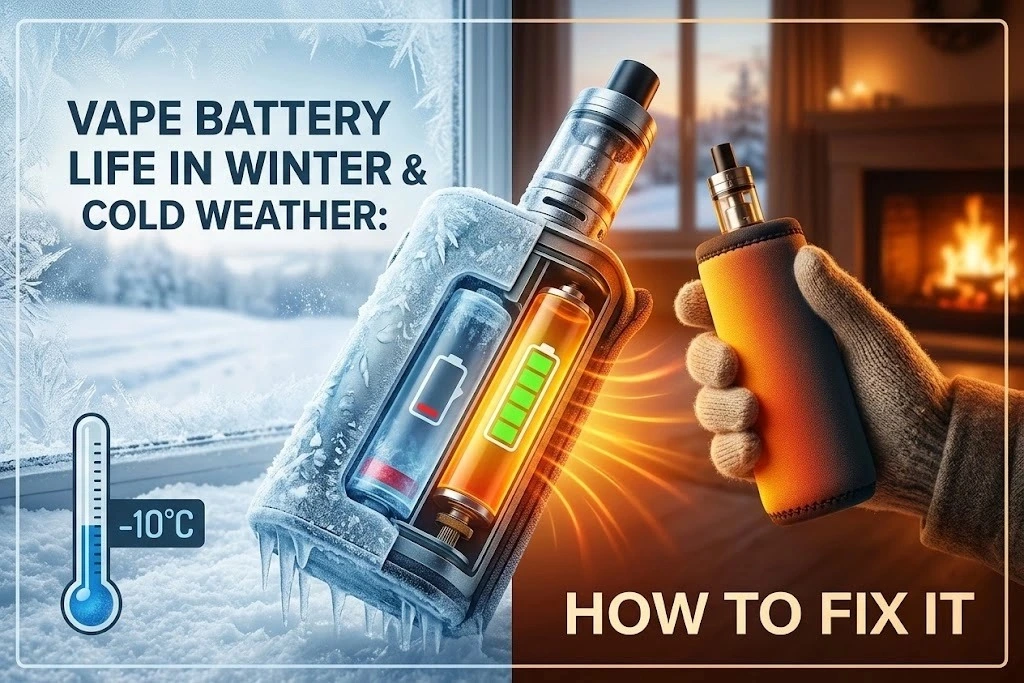
Vape battery performance can change significantly during winter and cold weather. Many vape users notice that their devices lose battery power faster, take longer to charge, produce less vapour, or stop working temporarily when exposed to low temperatures. These problems can be frustrating, especially when using disposable vapes, rechargeable pod systems, or advanced vape kits.
The good news is that cold-weather battery problems are often temporary. Understanding how temperature affects lithium-ion batteries and following a few simple maintenance practices can help protect your device and maintain more consistent performance.
Whether you use a disposable vape, a rechargeable pod system, or a refillable vape kit, this guide explains why battery life decreases in cold weather, how to fix common problems, and how to maintain your device throughout winter.
1. Why Does Cold Weather Affect Vape Battery Life?
Most modern rechargeable vape devices use lithium-ion batteries. These batteries are popular because they offer a good balance of energy capacity, size, and charging performance.
However, lithium-ion batteries are sensitive to temperature changes. Cold weather slows down the chemical reactions inside the battery, making it harder for the device to deliver energy efficiently.
As temperatures decrease, users may experience:
- Faster battery percentage drops.
- Reduced vapour production.
- Slower device performance.
- Difficulty charging the battery.
- Unexpected device shutdowns.
- Shorter usage time between charges.
For example, a rechargeable vape that normally lasts throughout the day might appear to lose power much faster when left outside in freezing temperatures.
This does not necessarily mean the battery is permanently damaged. In many situations, allowing the device to return gradually to room temperature can restore more normal performance.
2. Common Signs of Vape Battery Problems in Winter
Recognising early warning signs can help you determine whether your vape is experiencing a temperature-related problem or a more serious battery issue.
Battery Percentage Drops Quickly
One of the most common winter problems is an unexpectedly low battery percentage. A device displaying 70% battery power may suddenly show a much lower reading after spending time in cold conditions.
This happens because low temperatures affect the battery’s ability to deliver energy and can influence how accurately the device estimates its remaining charge.
Vape Produces Less Vapour
Cold temperatures can affect more than battery performance. E-liquid also becomes thicker when exposed to low temperatures.
When the liquid moves more slowly through the wick, the coil may not receive enough e-liquid to operate consistently. This can result in reduced vapour production or a less satisfying experience.
Device Turns Off Unexpectedly
A vape may suddenly stop working even when its battery indicator suggests that some power remains.
Cold conditions can temporarily reduce the voltage available from a lithium-ion battery. If the voltage falls below the device’s operating threshold, its protection system may shut it down.
Charging Takes Longer
Another common issue is slower charging or a device that refuses to charge immediately after being exposed to cold weather.
Lithium-ion batteries should not be charged when they are too cold. Allowing the device to return to the manufacturer’s recommended charging temperature is important for battery safety.
3. How to Fix Vape Battery Problems in Cold Weather
If your vape starts losing battery performance during winter, several practical steps can help.
Keep Your Vape at Room Temperature
The simplest solution is to avoid exposing your device to extremely cold environments for extended periods.
When travelling outdoors, keep your vape in an appropriate protective case or an inside pocket where it can remain closer to normal room temperature.
Avoid placing it directly against wet clothing or materials that could expose the charging port to moisture.
If the device becomes cold, allow it to warm naturally before using or charging it.
Avoid Charging a Cold Vape
Charging a lithium-ion battery while it is below its recommended temperature range can cause permanent damage.
If your vape has been outside in freezing weather, do not immediately connect it to a charger.
Instead:
- Bring the device indoors.
- Place it in a dry location.
- Allow it to reach room temperature naturally.
- Check the device for condensation or moisture.
- Follow the manufacturer’s charging instructions.
Never use a heater, hairdryer, radiator, or direct sunlight to warm a cold vape quickly.
Use the Correct Charging Cable
A damaged or unsuitable charging cable can make battery problems worse.
Always use a compatible charging cable and a power adapter that meets the manufacturer’s specifications.
Check the charging port for dust, lint, or visible damage. If the port is dirty, follow the manufacturer’s cleaning instructions rather than inserting sharp objects.
If the vape continues to charge inconsistently after returning to room temperature, the cable, charging port, or battery may require inspection.
Avoid Completely Draining the Battery
Allowing a rechargeable vape battery to reach an extremely low charge regularly can contribute to battery wear.
During winter, it is sensible to monitor the battery indicator and recharge the device according to the manufacturer’s recommendations.
However, do not leave a vape connected to a charger unattended for extended periods unless the manufacturer specifically permits it.
Protect Your Vape from Moisture
Moving between cold outdoor environments and warm indoor spaces can sometimes cause condensation.
Moisture around the charging port or internal electrical components may interfere with normal operation.
Keep your vape dry and allow any condensation to clear naturally before charging. If liquid has entered the device, stop using it and seek manufacturer support.
4. Best Ways to Protect Vape Batteries During Winter
Preventing cold-weather battery problems is generally easier than trying to fix them later.
Here are some useful habits for everyday vape maintenance.
Store Your Device Properly
Storage temperature plays an important role in battery health.
Avoid leaving your vape:
- Inside a freezing car overnight.
- Outdoors during extremely cold weather.
- Near heating equipment.
- In direct sunlight.
- In damp bags or pockets.
- In locations exposed to extreme temperature changes.
A cool, dry place within the manufacturer’s recommended storage temperature range is generally suitable.
Carry Your Vape in an Inside Pocket
When going outside during winter, an inside jacket pocket can help reduce exposure to cold air.
Avoid placing the device in a tight pocket where it may be crushed, bent, or accidentally activated.
For disposable vapes, a protective case can also help prevent physical damage and keep the mouthpiece clean.
Check Battery Condition Regularly
If your rechargeable vape has a battery indicator, check it periodically.
Pay attention to unusual changes, such as:
- Battery percentages jumping unexpectedly.
- Charging stopping repeatedly.
- The device becoming unusually hot.
- Swelling or physical deformation.
- Frequent automatic shutdowns.
Swelling, unusual heat, leaking, or physical battery damage should never be ignored. Stop using and charging the device and follow the manufacturer’s instructions for safe handling and disposal.
Avoid Leaving Your Vape in a Car
Vehicles can experience significant temperature changes during winter.
Even when the outdoor temperature seems manageable, the interior of a parked vehicle can become considerably colder.
Leaving a vape inside a car for several hours may affect its battery performance and expose it to unnecessary temperature stress.
Taking the device indoors is a better storage practice.
5. Does Cold Weather Affect Disposable Vapes?
Yes. Disposable vapes can also experience reduced performance during winter.
Although many disposable models are designed for convenience, they still rely on batteries that are affected by temperature.
Common problems include reduced vapour production, weaker performance, flashing indicator lights, and devices that stop activating temporarily.
Unlike rechargeable pod systems, some disposable devices cannot be recharged or repaired by the user.
If a disposable vape stops working in cold weather:
- Move it to a dry indoor environment.
- Allow it to reach room temperature naturally.
- Check whether the mouthpiece or airflow opening is obstructed.
- Follow the manufacturer’s instructions for normal operation.
- Stop using it if it shows signs of leakage, swelling, or damage.
Never attempt to open a disposable vape, replace its internal battery, or modify its electrical components.
6. How Cold Weather Affects E-Liquid and Vape Coils
Battery performance is not the only factor that changes during winter. E-liquid and coil performance can also be affected by lower temperatures.
E-Liquid Becomes Thicker
Most vape liquids contain propylene glycol (PG) and vegetable glycerin (VG).
VG is naturally thicker than PG. When temperatures fall, the viscosity of e-liquid increases, making it flow more slowly through the wick.
This can create problems for devices that depend on consistent liquid absorption.
Increased Risk of Dry Hits
When thickened e-liquid cannot reach the coil quickly enough, the wick may become insufficiently saturated.
This can produce a dry or burnt taste.
To reduce this problem, avoid repeated activation when the device is not producing vapour normally. Allow the liquid to return to a suitable temperature and follow the device manufacturer’s usage instructions.
Flavour Performance May Change
Cold e-liquid can sometimes produce a different flavour experience.
Some users notice that fruit, mint, and dessert flavours seem less pronounced when the device is cold.
Allowing the device and liquid to reach a suitable operating temperature may improve consistency.
7. Winter Maintenance Tips for Rechargeable Pod Systems
Rechargeable pod systems require regular maintenance, especially when temperature changes affect their performance.
Consider the following practices:
Inspect the charging port: Check for dust, debris, and moisture before connecting the charger.
Clean the device carefully: Use a dry, soft cloth to clean the exterior. Follow manufacturer instructions when cleaning pod contacts.
Check the pod connection: Make sure the pod is properly installed and that its electrical contacts are clean and dry.
Monitor battery performance: If the device repeatedly loses power despite normal temperatures, the battery may be deteriorating.
Replace damaged pods: Cracked, leaking, or malfunctioning pods should be replaced according to the manufacturer’s recommendations.
Follow charging guidelines: Use compatible charging equipment and avoid charging outside the recommended temperature range.
These simple maintenance habits can help reduce unnecessary wear and keep a rechargeable vape operating more consistently.
8. Common Winter Vape Battery Mistakes to Avoid
Some habits can make cold-weather battery problems worse. Avoid the following mistakes.
Using Direct Heat to Warm the Device
Never place your vape on a radiator or use a hairdryer to warm it quickly. Excessive heat can damage the battery, electronics, and internal components.
Natural warming at room temperature is safer.
Charging Immediately After Coming Indoors
A device that has been exposed to freezing temperatures should not be charged immediately.
Allow it to reach the manufacturer’s recommended charging temperature first.
Ignoring Battery Damage
A swollen battery, unusual smell, leaking device, or excessive heat can indicate a serious safety problem.
Stop using the device rather than attempting to repair it yourself.
Leaving the Device Outside Overnight
Extended exposure to cold conditions can negatively affect battery performance and overall device condition.
Store your vape in a suitable indoor environment whenever possible.
Using an Incompatible Charger
Different vape devices have different charging requirements. Using an unsuitable adapter or damaged cable can create unnecessary electrical risks.
Always follow the manufacturer’s specifications.
9. How to Extend Vape Battery Life Throughout the Year
Although winter creates additional challenges, good battery habits are useful in every season.
Here are some ways to maintain rechargeable vape batteries:
- Avoid unnecessary exposure to extreme temperatures.
- Use manufacturer-approved charging accessories.
- Keep charging ports clean and dry.
- Avoid repeated complete battery discharges.
- Do not leave the device charging unattended for extended periods.
- Store unused devices according to manufacturer guidance.
- Avoid dropping or physically damaging the battery.
- Replace devices that show signs of battery deterioration.
Remember that rechargeable batteries gradually lose capacity through normal use. Even with excellent maintenance, battery performance will eventually decline.
10. Frequently Asked Questions About Vape Battery Life in Winter
Why Does My Vape Battery Die Faster in Cold Weather?
Cold temperatures slow the chemical reactions inside lithium-ion batteries and reduce their ability to deliver energy efficiently. This can make the battery indicator drop faster and reduce the device’s operating time.
Can Cold Weather Permanently Damage a Vape Battery?
Cold exposure does not always cause permanent damage. However, charging a lithium-ion battery when it is below its recommended temperature range can cause permanent damage. Repeated exposure to extreme temperatures can also affect battery lifespan.
How Do I Warm Up a Cold Vape Safely?
Bring the device indoors and let it reach room temperature naturally. Keep it away from direct heat, radiators, hairdryers, and other heating sources.
Should I Charge My Vape Immediately After Coming Inside?
No. If the device is very cold, wait until it reaches the manufacturer’s recommended charging temperature. Check that the device and charging port are dry before connecting it.
Do Disposable Vapes Lose Battery Power Faster in Winter?
They can. Disposable vapes also use batteries that are affected by cold temperatures. Their performance may temporarily decrease when exposed to low temperatures.
Does Cold Weather Affect Vape Flavour?
Yes. Cold temperatures can make e-liquid thicker and slow its movement through the wick. This may affect vapour production and flavour consistency.
Can I Leave My Vape in My Car During Winter?
It is better not to. Parked vehicles can become very cold, exposing the battery and internal components to unsuitable storage conditions.
How Long Should I Wait Before Charging a Cold Vape?
There is no universal waiting time because it depends on the device’s temperature and the manufacturer’s specifications. Wait until the device has naturally reached the recommended charging temperature. Do not use artificial heat to speed up the process.
11. Final Thoughts: Keep Your Vape Battery Healthy During Winter
Cold weather can affect vape battery performance, charging behaviour, e-liquid consistency, and overall device operation. However, many winter-related problems can be reduced through proper storage and careful handling.
The most important habits are keeping your device within its recommended temperature range, avoiding charging when it is too cold, protecting it from moisture, and using compatible charging accessories.
Whether you use a disposable vape or a rechargeable pod system, taking care of its battery can help maintain more consistent performance and reduce unnecessary damage.