

Blog
JUUL Device Components Explained: A Complete Guide to Its Parts and Functions

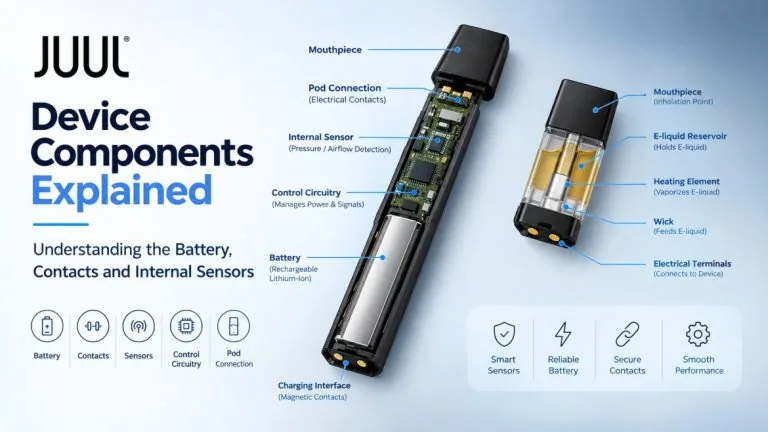
The JUUL device is a compact electronic vaping device designed with a simple, minimalist structure. Its small size, lightweight construction, and straightforward operation make it different from many traditional vaping devices. Although the JUUL has a relatively simple external appearance, it contains several important components that work together to power the device, heat the e-liquid, and produce an aerosol.
Understanding the different JUUL device components can help users learn how the device is constructed, what each part does, and why proper handling and maintenance are important. From the rechargeable battery to the pod connection and internal heating system, every component has a specific function.
This guide explains the main parts of a JUUL device, their individual purposes, how they work together, and some common issues associated with different components.
1. JUUL Device Body
The device body is the main external structure of a JUUL vape. It contains the internal electronic components and provides the physical support needed to connect the pod.
JUUL devices are known for their slim, rectangular design. The body is generally made from lightweight metal materials, giving it a smooth finish and a compact appearance.
Main functions of the device body:
- Holds and protects the internal electronic components.
- Provides a connection point for compatible JUUL 2 pods.
- Houses the rechargeable battery.
- Supports the internal electrical system.
- Gives the device its compact and portable design.
The device body protects sensitive components from everyday handling. However, it should still be kept away from excessive moisture, heat, and physical damage.
2. Rechargeable Battery
The rechargeable battery is one of the most important components of a JUUL device. It supplies the electrical energy required for the device’s electronic system and heating mechanism.
JUUL devices use an integrated lithium-ion battery rather than a removable battery. This design allows the device to remain compact and reduces the number of separate components users need to handle.
Functions of the battery:
- Supplies power to the electronic circuit.
- Supports the operation of the heating system.
- Powers the device’s indicator light.
- Stores electrical energy between charging sessions.
Battery performance can change over time. Repeated charging cycles and exposure to high temperatures may affect its overall capacity.
Users should avoid attempting to remove or replace the internal battery themselves. If the battery becomes damaged, swollen, unusually hot, or stops functioning correctly, the device should no longer be used.
3. JUUL Pod Cartridge
The JUUL pod is the replaceable cartridge that connects to the device body. It contains the liquid used by the device and includes the components required to deliver it to the heating area.
Unlike refillable tanks found in some vaping systems, traditional JUUL pods are designed as prefilled cartridges.
Important parts of a JUUL pod include:
- Mouthpiece.
- Liquid reservoir.
- Internal liquid-delivery material.
- Electrical and heating connection area.
- Cartridge housing.
The pod is designed to fit into the top of the device. Its connection allows the device to interact with the cartridge’s heating system.
Different JUUL pod varieties may have different flavour profiles and nicotine concentrations, depending on the market and product version. Users should always check the product packaging for accurate information.
4. Mouthpiece
The mouthpiece is the top section of the JUUL pod. It is the part that comes into contact with the user’s lips during operation.
Its primary purpose is to provide an opening through which the aerosol travels from the pod.
Key functions of the mouthpiece:
- Provides the airflow outlet.
- Directs aerosol towards the user.
- Forms the upper section of the pod.
- Helps maintain the cartridge’s enclosed structure.
The mouthpiece is generally designed with a smooth, narrow shape that complements the compact dimensions of the device.
Keeping the mouthpiece clean is important for basic hygiene. Dust and other particles can collect around its opening when the device is carried in a pocket or bag.
5. Heating Element
The heating element is responsible for heating the liquid supplied by the pod’s internal liquid-delivery system. This process creates an aerosol that travels through the mouthpiece.
The heating system is located within the pod assembly rather than being a separate external component.
Its main functions include:
- Receiving electrical energy from the device.
- Heating the liquid supplied to the heating area.
- Supporting aerosol production.
- Working with the pod’s internal liquid-delivery components.
The heating element is an important part of the JUUL system because the device depends on it to operate.
If the heating system becomes damaged, the device may fail to produce aerosol or may operate inconsistently. Users should not attempt to dismantle the pod to repair the internal heating mechanism.
6. Internal Liquid Reservoir
The liquid reservoir is the section inside the JUUL pod that stores the e-liquid.
Traditional JUUL cartridges are prefilled, meaning the liquid is supplied inside the pod rather than being added by the user.
The reservoir is designed to keep the liquid contained until it is delivered to the heating area.
Main purposes of the reservoir:
- Stores the pod’s e-liquid.
- Keeps the liquid enclosed within the cartridge.
- Supplies liquid to the internal delivery material.
- Helps prevent direct exposure of the liquid during normal use.
The reservoir is an essential part of the pod’s construction. If a cartridge develops a crack or begins leaking, it should not be used.
7. Liquid-Delivery Material
Inside a JUUL pod, a liquid-delivery structure helps move e-liquid from the reservoir towards the heating area.
This component is sometimes described as a wick or liquid-transfer material. Its role is to maintain contact between the stored liquid and the heating system.
Important functions include:
- Transferring liquid towards the heating area.
- Supporting consistent liquid delivery.
- Working alongside the heating element.
- Helping the cartridge produce aerosol during operation.
The liquid-delivery material is an internal component and is not designed for independent replacement by users.
Damage to this part can affect the overall performance of the pod.
8. Electrical Contacts and Pod Connection
The electrical contacts are the connection points between the JUUL device body and the compatible pod.
When a pod is properly inserted, these contacts allow the electronic system to communicate with the cartridge and supply the necessary electrical power.
Main functions:
- Establish an electrical connection.
- Transfer power from the device to the pod.
- Support the operation of the heating system.
- Help the device recognise a properly connected cartridge.
If the contacts become dirty or obstructed, the device may not function as expected.
Users should keep the connection area dry and free from visible debris. Avoid using sharp metal objects or excessive liquid when cleaning this section.
9. LED Indicator Light
The LED indicator light is a small but useful component located on the exterior of the JUUL device.
It provides visual feedback about certain device conditions, such as battery status and operation.
Depending on the model and its indicator system, different light colours or patterns may communicate different information.
Common indicator functions include:
- Showing battery-related information.
- Providing feedback during operation.
- Indicating certain device conditions.
- Helping users recognise when attention may be required.
Understanding the indicator system can make basic device troubleshooting easier. Users should refer to the instructions supplied with their particular JUUL model because indicator meanings may vary.
10. Charging Contacts and Charging System
The charging system allows the integrated battery to receive electrical power.
Many original JUUL devices use a magnetic USB charging dock. The device attaches to the charging accessory through its designated connection points.
Main charging components include:
- Charging contacts.
- Magnetic charging connection.
- USB charging accessory.
- Internal battery-management electronics.
The charging system is designed to make recharging straightforward without requiring users to remove the battery.
Users should only use compatible charging accessories and avoid charging a device that has visible physical damage or signs of battery failure.
11. Airflow System
The airflow system helps control how air moves through the device during operation.
JUUL devices use a compact airflow arrangement that works with the pod and mouthpiece to provide a draw-activated experience.
Its main functions include:
- Allowing airflow through the device.
- Supporting the movement of aerosol towards the mouthpiece.
- Working with the internal activation system.
- Supporting the overall inhalation experience.
Airflow openings should remain free from dust and debris. Blocked airflow may affect how the device performs.
12. Draw-Activation Sensor
Traditional JUUL devices use a draw-activated operating system. This means users do not need to press a firing button to activate the device.
An internal sensor detects airflow changes when the user draws through the mouthpiece. The electronic system then controls the activation of the heating mechanism.
Main functions of the sensor:
- Detects inhalation-related airflow.
- Sends an activation signal to the electronic system.
- Supports button-free operation.
- Helps coordinate the heating process.
The sensor is an internal electronic component and is not intended to be repaired or adjusted by users.
13. Protective Internal Circuitry
The internal electronic circuitry manages the interaction between the battery, sensor, charging system, and heating mechanism.
It helps coordinate the different electrical functions required for normal device operation.
Depending on the model, the electronic system may include battery-management and protective functions.
Its responsibilities include:
- Managing electrical power.
- Coordinating device activation.
- Supporting charging operations.
- Monitoring certain operating conditions.
- Helping protect internal components.
Damage to the internal circuit may cause charging problems, inconsistent operation, or complete device failure.
Users should avoid opening the device because doing so can expose delicate electronics and the integrated battery.
How JUUL Device Components Work Together
Although every component has a separate function, the JUUL device depends on several parts working together.
Here is a simplified explanation of the operating process:
- Pod connection: A compatible JUUL pod is inserted into the device body.
- Airflow detection: The internal sensor detects airflow when the user draws through the mouthpiece.
- Electronic activation: The internal circuit manages the activation process.
- Power delivery: The rechargeable battery supplies electrical energy to the heating system.
- Liquid delivery: The pod’s internal liquid-delivery material supplies liquid to the heating area.
- Aerosol production: The heating element heats the liquid and produces an aerosol.
- Airflow movement: The aerosol travels through the pod and exits through the mouthpiece.
This integrated design allows the JUUL device to operate without the complicated controls found in some larger vaping systems.
Common JUUL Component Problems and Their Causes
Understanding the components can also help users recognise common device problems.
| Component | Possible problem | General explanation |
|---|---|---|
| Battery | Device does not power on | Battery may be depleted or damaged |
| Pod | Liquid leakage | Cartridge may be cracked or defective |
| Mouthpiece | Restricted airflow | Dust or debris may be present |
| Heating system | Inconsistent operation | Internal heating component may be damaged |
| Electrical contacts | Pod not recognised | Connection may be obstructed |
| Charging system | Battery does not charge | Charging accessory or contacts may be faulty |
| LED indicator | Unexpected light pattern | Device may require attention |
| Airflow sensor | Activation failure | Internal sensor may not be functioning correctly |
If a device becomes unusually hot, leaks, shows physical damage, or develops a battery-related problem, stop using it. Do not attempt to repair sealed electrical components yourself.
Tips for Maintaining JUUL Device Components
Proper handling can help preserve the external condition of a JUUL device and reduce avoidable damage.
Here are some useful maintenance considerations:
- Keep the device dry: Avoid exposing the device body and electrical contacts to water.
- Clean the exterior: Use a soft, dry cloth to remove dust and fingerprints.
- Check the pod: Inspect cartridges for cracks, leaks, or visible damage.
- Protect the mouthpiece: Keep it away from dirt and other contaminants.
- Use compatible charging accessories: Follow the manufacturer’s charging instructions.
- Avoid excessive heat: Do not leave the device inside a hot vehicle or near direct heat sources.
- Handle carefully: Avoid dropping, bending, or applying unnecessary pressure to the device.
JUUL devices contain nicotine products in many markets. Nicotine is addictive, and these products are not safe for non-users, young people, or pregnant individuals. Adults who do not currently use nicotine should not start.
Frequently Asked Questions (FAQ)
1. What are the main components of a JUUL device?
The main components include the device body, rechargeable battery, pod cartridge, mouthpiece, heating element, liquid reservoir, liquid-delivery material, electrical contacts, LED indicator, charging system, airflow system, and internal electronic circuitry.
2. What is the function of the JUUL battery?
The integrated lithium-ion battery supplies electrical energy to the device’s electronic system and heating mechanism. It can be recharged using the compatible charging accessory.
3. Can JUUL pods be refilled?
Traditional JUUL pods are designed as prefilled cartridges rather than user-refillable tanks. Attempting to open or refill them can cause leakage and damage.
4. What does the JUUL LED light do?
The LED provides visual feedback about certain device conditions, including battery-related information and operation. Its exact signals depend on the model.
5. What is the purpose of the JUUL heating element?
The heating element heats the liquid supplied by the pod’s internal liquid-delivery system to produce an aerosol.
6. Why is my JUUL device not recognising a pod?
Possible causes include an improperly seated cartridge, obstructed electrical contacts, a damaged pod, or an internal electronic problem.
7. Can I replace the JUUL internal battery?
The battery is integrated into the device and is not designed for user replacement. Attempting to remove it can create electrical and fire hazards.
8. How do I know if a JUUL pod is damaged?
Visible cracks, leakage, unusual physical changes, or poor connection can indicate a damaged cartridge. A damaged pod should not be used.
Finally: Understanding JUUL Device Components
The JUUL device combines several compact components to create a simple electronic system. Each part has a specific responsibility, from storing electrical energy and holding the pod to detecting airflow and controlling the heating mechanism.
The rechargeable battery powers the system, the pod stores the liquid, the internal heating components produce aerosol, and the electronic circuitry coordinates the device’s operation. Other parts, including the mouthpiece, LED indicator, charging contacts, and airflow system, support everyday functionality.