

Blog
How to Choose the Right Nicotine Strength in UAE Vapes

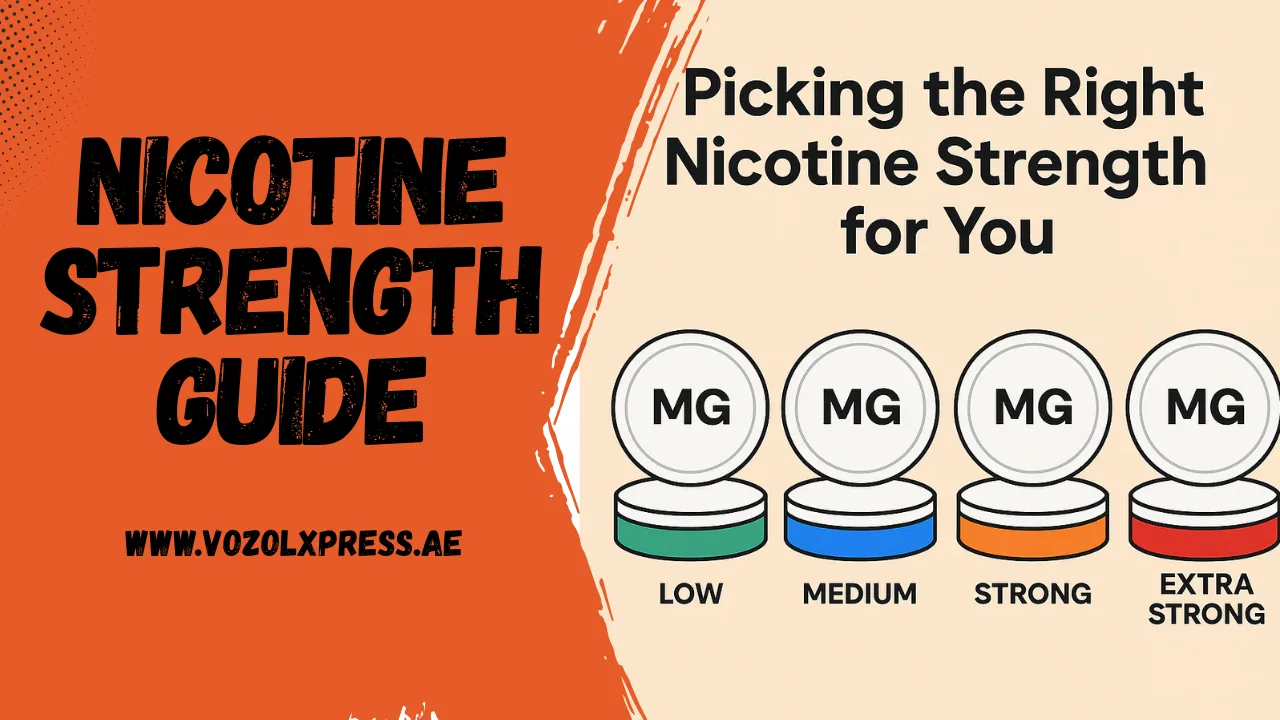
Choosing the right nicotine strength is one of the most important decisions when selecting a vape in the UAE. Vape products are available in different nicotine concentrations, including lower strengths for lighter use and higher strengths designed for people accustomed to stronger nicotine intake. Understanding the difference between nicotine strengths can help adult consumers make a more informed choice.
This guide explains nicotine strength, common labels such as mg/mL and percentages, factors to consider when comparing vape products, and practical tips for choosing an appropriate strength.
What Does Nicotine Strength Mean?
Nicotine strength indicates how much nicotine is contained in the vape liquid. It is commonly shown as mg/mL, meaning milligrams of nicotine per milliliter of e-liquid.
For example:
- 3 mg/mL = 3 mg of nicotine per milliliter
- 6 mg/mL = 6 mg/mL
- 12 mg/mL = 12 mg/mL
- 20 mg/mL = 20 mg/mL
- 50 mg/mL = 50 mg/mL
Some disposable vapes and pod systems display nicotine as a percentage instead. As a rough conversion:
| Label | Approx. Nicotine |
|---|---|
| 0.3% | 3 mg/mL |
| 0.6% | 6 mg/mL |
| 1.2% | 12 mg/mL |
| 2% | 20 mg/mL |
| 5% | 50 mg/mL |
Always check the manufacturer’s label because product formulations and labeling can vary.
Consider Your Previous Nicotine Use
One of the first things to consider is your previous nicotine consumption. If you are an adult who does not currently use nicotine, starting with a nicotine-containing vape is not recommended.
For existing adult nicotine users, previous consumption can provide a useful reference point. Someone accustomed to lower-nicotine products may find a high-strength vape unnecessarily intense, while someone accustomed to stronger nicotine products may find a very low strength unsatisfying.
However, nicotine intake from vaping is not determined by liquid concentration alone. Device power, puff duration, frequency of use, and the type of nicotine formulation can all affect nicotine delivery.
Understand Freebase Nicotine vs. Nicotine Salt
The type of nicotine used in a vape can influence how the product feels.
Freebase Nicotine
Traditional freebase nicotine is commonly associated with lower nicotine concentrations. At higher concentrations, it can produce a stronger throat sensation.
Freebase products may therefore appeal to adult users who prefer a more noticeable throat hit and lower nicotine concentrations.
Nicotine Salt
Nicotine salts are formulated differently and are commonly used in pod systems and disposable vapes. They can allow higher nicotine concentrations with a smoother-feeling inhale than some comparable freebase formulations.
Because the experience can feel smoother, users should not assume that a product is weak simply because the throat sensation is mild.
Check the Nicotine Label Carefully
When buying a vape in the UAE, carefully inspect the packaging for nicotine information.
Look for:
- Nicotine concentration
- Nicotine type, if provided
- E-liquid volume
- Manufacturer information
- Batch or authenticity information
- Appropriate warnings and labeling
- Product authenticity
Do not confuse puff count with nicotine strength. A product advertised as 10,000, 20,000, or 40,000 puffs does not automatically indicate how much nicotine is delivered with every puff.
Don’t Choose Nicotine Strength Based Only on Puff Count
Puff count is primarily a marketing or estimated-use specification. It does not tell you whether the nicotine level is appropriate.
For example, two disposable vapes could have similar advertised puff counts while containing substantially different nicotine concentrations.
A better approach is to consider the complete specification:
Nicotine concentration + e-liquid capacity + device design + personal usage pattern
This provides a more meaningful comparison than puff count alone.
Higher Nicotine Does Not Mean Better
A common mistake is assuming that a stronger nicotine concentration provides a better vaping experience. That is not necessarily true.
Higher nicotine concentrations can increase nicotine exposure, particularly when a person uses the product frequently. For someone who is already comfortable with a lower concentration, moving to a much stronger product may result in an unpleasant experience.
Possible signs of excessive nicotine exposure can include:
- Nausea
- Dizziness
- Headache
- Shakiness
- Sweating
- Rapid heartbeat
- Vomiting
If these symptoms occur after nicotine use, stop using the product and seek appropriate medical advice, particularly if symptoms are severe or persistent.
Lower Nicotine Isn’t Automatically Risk-Free
It is also important to understand that a lower nicotine concentration does not make vaping harmless.
Nicotine is addictive, and vaping can expose users to substances in addition to nicotine. Adults who do not already use tobacco or nicotine products generally should not start vaping.
For adults who currently use nicotine, the goal should be informed decision-making rather than assuming that one particular concentration is universally “best.”
Think About Your Device
The device you use can affect your nicotine experience.
Pod Devices
Pod systems are often available with nicotine-salt formulations and can be paired with relatively concentrated e-liquids. Because of this, users should pay close attention to the nicotine concentration rather than judging strength by the smoothness of the vapor.
Disposable Vapes
Disposable products are commonly sold with pre-filled e-liquid and a stated nicotine concentration. Since the liquid cannot normally be adjusted, checking the specification before purchase is particularly important.
Refillable Devices
Refillable devices provide more flexibility because users can select different e-liquids. This can make it easier for adult users to choose a lower nicotine concentration if they want to reduce nicotine intake gradually.
Consider Your Vaping Frequency
How frequently you use a vape matters as much as the concentration.
Someone taking occasional puffs and someone vaping throughout the day can have very different nicotine exposure even when they use exactly the same product.
If you find yourself reaching for a vape constantly, increasing nicotine strength may not be the best solution. Frequent use can contribute to greater overall nicotine exposure.
Instead, consider discussing nicotine reduction with a qualified healthcare professional if reducing or stopping nicotine is your goal.
Be Careful When Switching Between Products
Switching from cigarettes to a disposable vape, pod system, or another nicotine product can change the way nicotine feels.
A product with the same numerical nicotine concentration may not feel identical because nicotine delivery depends on several factors, including:
- Device power
- Coil characteristics
- Puff duration
- Puff frequency
- Nicotine formulation
- E-liquid composition
Therefore, avoid assuming that 20 mg/mL in one product will necessarily feel identical to 20 mg/mL in another product.
UAE Buyers Should Pay Attention to Product Authenticity
When purchasing vaping products in the UAE, authenticity and proper labeling are important considerations.
Counterfeit products may have inaccurate nicotine information, poor manufacturing quality, or packaging that imitates genuine products.
Before purchasing, check whether:
- Packaging is professionally printed.
- The nicotine strength is clearly stated.
- The product information is consistent.
- The packaging is sealed appropriately.
- The seller is legitimate.
- The product complies with applicable UAE requirements.
If the packaging looks suspicious, damaged, or inconsistent with the manufacturer’s normal presentation, it is better not to use the product.
How to Compare Common Nicotine Strengths
Rather than automatically selecting the strongest option, compare strengths according to your existing nicotine use.
0 mg/mL
A 0 mg product contains no nicotine. It may be relevant to adults who want the vaping experience without nicotine, although vaping itself is not risk-free.
3–6 mg/mL
These are relatively low concentrations and may be considered by adult users who prefer lower nicotine levels.
10–12 mg/mL
These concentrations sit in the middle range and may be found in various e-liquid products.
18–20 mg/mL
These are substantially stronger than low-strength products. They are commonly associated with nicotine-salt products and should be approached carefully because nicotine exposure can become significant.
50 mg/mL
This is a very high nicotine concentration. Adult consumers should take particular care with products at this level, follow the product labeling, and avoid assuming that stronger means better.
Nicotine Strength and Throat Hit
Some people choose nicotine strength based on throat sensation. However, throat hit is influenced by more than nicotine.
It can also depend on:
- PG/VG ratio
- Nicotine formulation
- Flavoring
- Device temperature
- Coil design
- Airflow
Therefore, increasing nicotine simply to achieve a stronger throat hit may result in unnecessarily high nicotine exposure.
How to Make a More Informed Choice
A simple process can make comparing products easier:
Step 1: Check Whether You Already Use Nicotine
If you don’t currently use nicotine, don’t begin vaping simply to experiment with nicotine strengths.
Step 2: Check the Exact Concentration
Look for mg/mL or % on the packaging.
Step 3: Identify the Nicotine Type
Determine whether the product uses nicotine salt or freebase nicotine when that information is available.
Step 4: Consider Your Usage Pattern
Think about how frequently you currently use nicotine rather than focusing solely on the device’s puff count.
Step 5: Start From What You Already Know
For existing adult nicotine users, comparing the new product with the concentration and format you already use can provide a better reference than choosing the strongest product available.
Step 6: Pay Attention to How You Feel
If you experience symptoms such as nausea, dizziness, headache, or a racing heartbeat, stop using the product and seek medical advice if necessary.
Frequently Asked Questions
What nicotine strength is best for beginners?
There is no universally appropriate nicotine strength for beginners. Adults who do not already use nicotine should generally avoid starting. Existing adult nicotine users should consider their current nicotine consumption and product type rather than automatically choosing a high concentration.
Is 20 mg nicotine strong?
Yes. 20 mg/mL is considerably stronger than low-strength e-liquid, so users should not treat it as an ordinary low-nicotine option.
Is 50 mg nicotine too strong?
50 mg/mL is a very high concentration. It can result in substantial nicotine exposure, particularly with frequent use. Always follow the product labeling and use caution.
Does a higher nicotine strength give more vapor?
Not necessarily. Vapor production is affected mainly by the device, coil, airflow, e-liquid composition, and power. Nicotine concentration and vapor production are separate specifications.
Does nicotine salt feel weaker?
Not necessarily. Nicotine salts can feel smoother at higher concentrations, but a smoother throat sensation does not mean less nicotine.
Should I choose a vape based on puff count?
No. Puff count should not be used as a substitute for checking nicotine concentration, e-liquid capacity, device specifications, and your own usage pattern.
Final Thoughts
Choosing the right nicotine strength in UAE vapes requires more than simply selecting the highest or lowest number on the package. Nicotine concentration, nicotine formulation, device type, usage frequency, and your existing nicotine consumption all influence the overall experience.
For adult nicotine users, carefully reading the label and comparing products on their actual nicotine concentration can help avoid accidentally choosing a much stronger product than intended. Remember that nicotine is addictive, and vaping is not risk-free. If your goal is to reduce or stop nicotine use, consider speaking with a qualified healthcare professional about safer ways to do so.