

Blog
Vape Battery Life in Winter & Cold Weather: How to Fix It

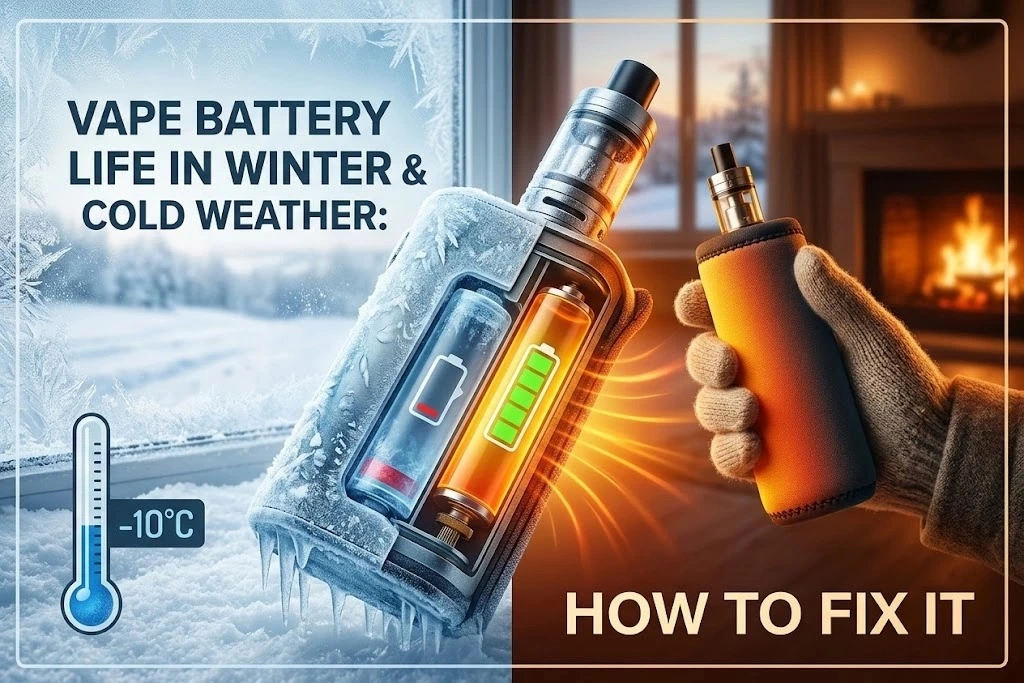
Cold weather can affect the performance of vape batteries, making them drain faster, charge more slowly, or provide less consistent power than usual. If your disposable vape, rechargeable vape, or pod system seems to lose battery life during winter, the temperature may be one of the reasons.
Most rechargeable vape devices use lithium-ion batteries, which perform best within a specified temperature range. When temperatures drop, the chemical reactions inside these batteries slow down, potentially reducing the power available to the device.
Understanding how cold weather affects your vape battery can help you protect your vape device, improve performance, and prevent common battery problems. This guide explains why vape batteries struggle in winter, how to fix common issues, and how to maintain battery performance in colder conditions.
Why Does Cold Weather Affect Vape Battery Life?
Lithium-ion batteries rely on chemical reactions to store and release energy. Cold temperatures increase internal resistance and reduce the battery’s ability to deliver power efficiently.
As a result, you may notice several changes during winter:
- Battery percentage dropping faster than usual.
- Weaker or inconsistent vapor production.
- A device that temporarily stops working outdoors.
- Slower charging or charging errors.
- Battery indicators showing unexpected fluctuations.
- A vape that works again after warming to room temperature.
These symptoms do not necessarily mean the battery is permanently damaged. Performance may improve when the device returns to a suitable temperature. However, an old or degraded battery may experience more noticeable problems.
Common Vape Battery Problems in Winter
1. Faster Battery Drain
One of the most common winter complaints is that a vape battery runs out more quickly than expected. Cold temperatures can temporarily reduce the energy a battery can deliver, even if the device was fully charged before being taken outdoors.
Frequent vaping, high-power settings, and an aging battery can make the problem more noticeable.
How to fix it:
- Keep your vape within the manufacturer’s recommended operating temperature range.
- Avoid leaving it outside or in an unheated vehicle for extended periods.
- Allow the device to return naturally to room temperature before checking the battery level.
- If the battery continues draining quickly indoors, consider whether the battery has deteriorated.
2. Weak Vapor Production
Cold weather affects more than battery performance. E-liquid can become thicker at lower temperatures, particularly liquids with a higher vegetable glycerin (VG) content. Thicker liquid may flow more slowly through the wick, resulting in inconsistent vapor production.
A cold battery may also struggle to deliver the same power as it does in moderate temperatures.
How to fix it:
Allow the device to return naturally to room temperature before use. If vapor production remains weak, check the manufacturer’s troubleshooting instructions for airflow, liquid supply, and battery issues. Do not exceed the recommended power settings to compensate for reduced performance.
3. The Vape Will Not Turn On
Some devices may temporarily stop operating when their batteries become too cold. Built-in protection systems may also prevent normal operation if the battery temperature falls outside the supported range.
How to fix it:
- Stop trying to activate the device repeatedly.
- Move it to a dry indoor environment.
- Allow it to warm naturally to room temperature.
- Check for visible damage, leakage, or warning indicators.
- Follow the manufacturer’s instructions before attempting to use it again.
If the vape remains unresponsive after returning to a suitable temperature, the battery or electronics may require professional assessment or replacement.
4. Slow Charging in Cold Conditions
Charging a lithium-ion battery when it is too cold can damage it. Some devices restrict charging outside their supported temperature range, while others may display an error or refuse to charge.
How to fix it:
- Allow the device to reach the recommended charging temperature.
- Check the manufacturer’s instructions before connecting the charger.
- Use a compatible charging cable and power source.
- Never use a heater, hair dryer, radiator, or hot water to warm the battery.
- Do not charge a device that is wet or showing signs of damage.
Rapid temperature changes can damage internal components and create safety risks.
5. Battery Percentage Fluctuations
A vape may show a lower battery percentage outdoors and a higher percentage after warming up. This can happen because cold temperatures affect battery voltage and the accuracy of the charge indicator.
How to fix it:
Allow the device to stabilize at room temperature before checking its remaining charge. If the indicator continues to fluctuate significantly, the battery may be aging or the device may have an electronic fault.
7 Practical Ways to Protect Vape Battery Life in Winter
1. Keep Your Vape at a Moderate Temperature
Store your device indoors whenever possible. Avoid leaving it in freezing outdoor conditions, on a cold windowsill, or inside an unheated car.
Always follow the temperature limits specified by the manufacturer. Protecting the battery from extreme cold can help maintain more consistent performance.
2. Carry Your Vape in a Suitable Pocket
When outdoors, keeping your vape in a secure inside pocket can reduce its exposure to cold air. Ensure the device cannot be crushed or damaged by movement.
Keep it separate from keys, coins, and other metal objects that could damage the device or cause an electrical short circuit at exposed contacts.
3. Charge Only at the Recommended Temperature
Allow a cold device to reach its approved charging temperature before connecting it to power. Use the charging cable and power source recommended by the manufacturer.
Avoid leaving a device charging unattended for extended periods, and follow the manufacturer’s guidance on when to disconnect it.
4. Keep the Device Dry
Moving from cold outdoor air into a warm room can cause condensation to form on or inside electronic devices.
If moisture appears, do not charge or activate the vape. Follow the manufacturer’s drying and safety instructions. Do not use direct heat to speed up the process.
5. Check Power Settings
If your vape has adjustable power, use settings recommended for your device and coil. Higher power generally consumes more energy per puff and can make the battery run out sooner.
Avoid increasing the power unnecessarily when cold weather affects performance.
6. Monitor Battery Condition
Watch for unusual battery drain, repeated shutdowns, charging errors, or reduced runtime.
These signs may indicate battery wear rather than a temporary temperature problem. If the battery continues to perform poorly after returning to moderate temperatures, consider an approved repair or replacement.
7. Store the Device Properly
When not in use, keep your vape in a dry location away from direct sunlight, excessive humidity, and extreme temperatures.
For long-term storage, follow the manufacturer’s recommendations for the appropriate battery charge level and storage conditions.
How to Fix a Vape Battery That Drains Quickly in Winter
If your vape battery is losing power faster than normal, follow these troubleshooting steps.
Step 1: Check the Temperature
Determine whether the device has been exposed to unusually cold conditions. If it has, move it indoors and let it return naturally to room temperature.
Step 2: Inspect the Battery Indicator
Once the device has warmed up, check its charge level. If performance improves, the cold may have temporarily affected battery efficiency.
Step 3: Inspect the Charging Port
For rechargeable devices, look for visible dirt, moisture, corrosion, or damage around the charging port.
Do not insert metal objects into the port or attempt to charge a wet device. Follow the manufacturer’s instructions for cleaning and maintenance.
Step 4: Use the Correct Charger
Use a compatible charger and cable specified by the manufacturer. Avoid damaged cables, improvised charging arrangements, and unsuitable power sources.
Step 5: Check for Battery Wear
If the battery continues to drain rapidly in moderate temperatures, it may have lost capacity through normal aging.
A rechargeable device may need an approved battery replacement or replacement of the device itself.
Step 6: Stop Using Damaged Devices
If your vape becomes unusually hot, swells, leaks, produces an unusual smell, or shows other signs of battery damage, stop using and charging it.
Keep it away from combustible materials if you can do so safely, and follow local guidance for damaged lithium-ion batteries. Never attempt to open or repair a sealed battery yourself.
Does Cold Weather Affect Disposable Vapes?
Yes. Disposable vapes can also experience reduced battery performance in cold weather. Although many disposable models are not designed for battery replacement, they still rely on a battery to power the heating element and electronics.
Cold conditions may cause a disposable vape to produce less vapor, flash a warning light, or stop activating temporarily.
Consider the following precautions:
- Allow the device to return naturally to room temperature.
- Check the manufacturer’s temperature and troubleshooting instructions.
- Do not dismantle the device or attempt to replace its internal battery.
- Do not recharge a disposable model unless it is explicitly designed for charging.
- If the device remains faulty, discontinue use and dispose of it through an appropriate battery or electronic-waste collection service.
A disposable vape that stops working in the cold may have a temporary performance issue, but a depleted or damaged battery cannot necessarily be restored by warming it.
How Cold Is Too Cold for a Vape Battery?
The exact temperature limits depend on the battery chemistry, device design, and manufacturer’s specifications. Many lithium-ion batteries have charging temperature ranges that begin around 0°C (32°F), although some devices require a higher minimum. Their permitted operating temperature range may be broader than their charging range.
These figures are general examples, not universal limits for every vape.
| Condition | Possible effect | Recommended action |
|---|---|---|
| Cool weather | Slight reduction in battery performance | Follow the manufacturer’s guidance |
| Near or below freezing | Reduced power delivery or temporary shutdown | Keep the device within its approved operating range |
| Very cold battery | Charging may be unsafe or disabled | Allow it to warm naturally before charging |
| Sudden move from cold to warm | Condensation may develop | Keep the device dry and avoid charging if moisture is present |
| Swollen or damaged battery | Potential fire or injury risk | Stop use and charging |
Never assume a device is safe to charge simply because it turns on. Check its specified temperature limits, particularly after exposure to freezing conditions.
Does Warming a Vape Battery Restore Its Full Life?
Warming a cold battery back to its recommended operating temperature can restore some of its temporarily reduced performance. However, it does not reverse normal battery aging or repair physical damage.
Lithium-ion batteries gradually lose capacity through repeated charging cycles, prolonged storage, and exposure to unsuitable temperatures. If your vape has become less reliable throughout the year, rather than only during winter, the battery may be nearing the end of its useful life.
Avoid placing a vape on a heater or using a hair dryer to warm it. Gentle, natural warming at room temperature is the safer approach.
How to Make Your Vape Battery Last Longer Throughout Winter
Maintaining battery life involves more than protecting a device from cold air. A few everyday habits can help reduce unnecessary battery wear.
- Avoid extreme temperatures: Both excessive heat and extreme cold can harm battery performance.
- Follow charging instructions: Charge the device within its approved temperature range.
- Avoid unnecessary power consumption: Use appropriate power settings instead of maximum output when possible.
- Keep charging connections clean and dry: Follow the manufacturer’s approved cleaning instructions.
- Store rechargeable devices correctly: Follow the recommended charge level and storage conditions.
- Replace aging equipment responsibly: If runtime has deteriorated significantly, use an approved repair or replacement option.
These habits cannot eliminate the effects of cold weather, but they can help maintain reliable performance and reduce avoidable battery problems.
Frequently Asked Questions
1. Why Does My Vape Die Faster in Cold Weather?
Cold temperatures increase a lithium-ion battery’s internal resistance and reduce the energy it can deliver at a given moment. This can make the battery appear to drain faster or cause the device to shut down sooner.
2. Can I Charge My Vape Immediately After Coming Inside From the Cold?
Not if the battery is still below its recommended charging temperature or the device has condensation on it. Allow it to warm naturally, ensure it is dry, and follow the manufacturer’s charging instructions.
3. Will Keeping My Vape in My Pocket Help?
A secure inside pocket can reduce exposure to cold air. However, avoid storing the device where it may be crushed, exposed to moisture, or brought into contact with keys and coins.
4. Why Does My Vape Work Again After Warming Up?
Cold temperatures can temporarily reduce battery voltage and power delivery. Once the battery returns to a suitable temperature, normal operation may resume. Persistent faults should not be ignored.
5. Can Cold Weather Permanently Damage a Vape Battery?
Exposure to cold does not always cause permanent damage, but charging a lithium-ion battery below its permitted temperature can damage it. Repeated exposure to extreme conditions may also contribute to battery deterioration.
6. Should I Use a Disposable Vape If It Stops Working in Winter?
Allow it to return naturally to room temperature and consult the manufacturer’s instructions. If it remains faulty, leaks, swells, or shows signs of damage, stop using it. Never dismantle it or attempt an unauthorized repair.
7. Is It Safe to Warm a Vape With a Heater?
No. Direct heat can overheat the battery, damage internal components, and create a fire risk. Let the device warm gradually at room temperature instead.
Final Thoughts
Vape battery life in winter and cold weather can be affected by reduced battery efficiency, slower chemical reactions, thicker e-liquid, and temperature-related protection systems.
In many cases, the solution is straightforward: keep the device within its recommended temperature range, let it warm naturally, avoid charging it while cold or wet, and inspect it for signs of damage.
If your vape continues to lose power quickly after returning to normal conditions, the battery may be aging or the device may have another fault. Prioritize battery safety over attempts to restore performance, and always follow the manufacturer’s instructions for charging, storage, maintenance, and disposal.